
CNC Turning Services Factory
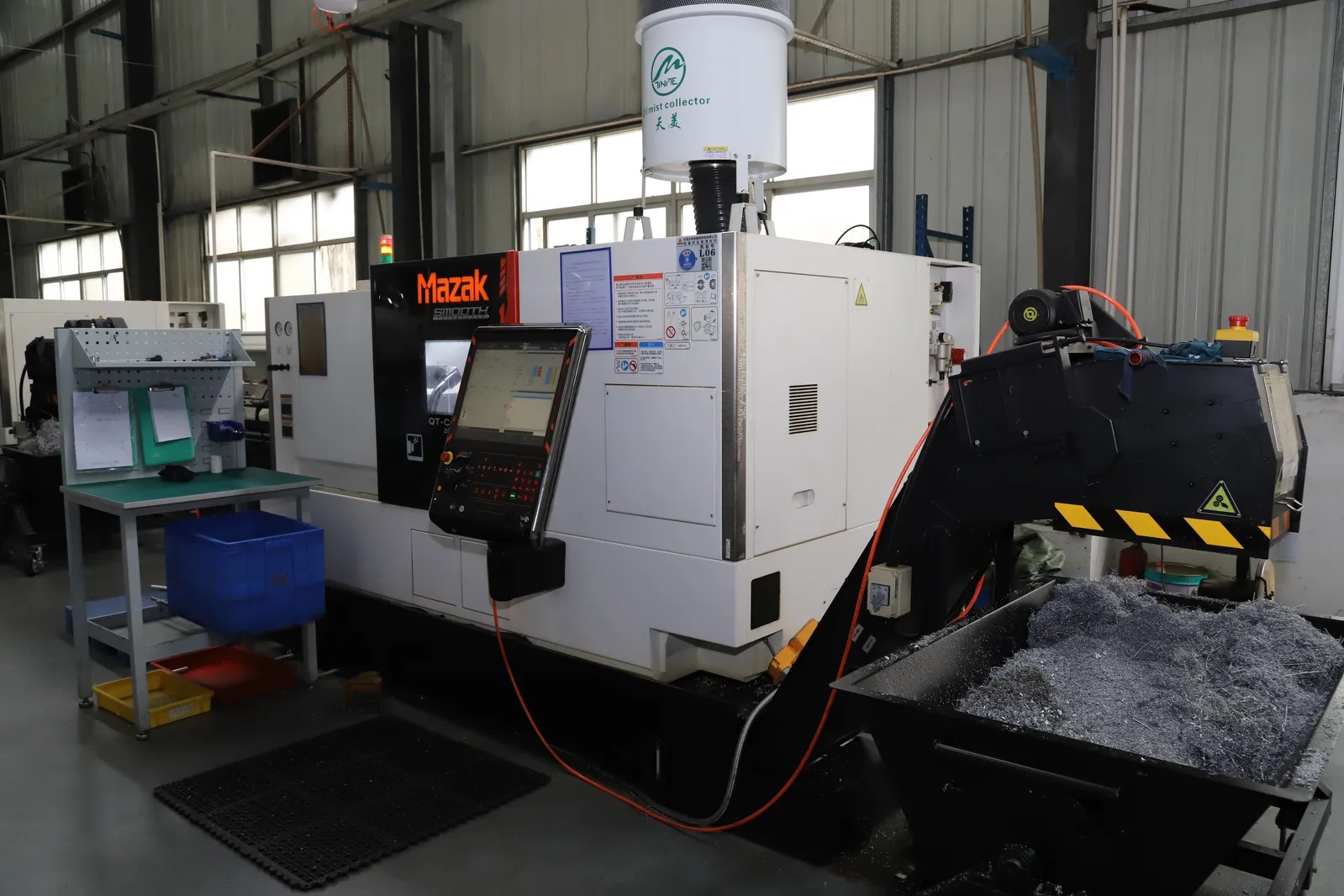
Naming the brands is only useful if the role of each machine class is clear, because the class — not the badge — is what changes how a part gets cut. The floor is organized by role, and each role exists to answer a specific geometry.
- High-speed machining centers — fast 3- and 4-axis mills that move through small to mid-size prismatic parts quickly. They favor aluminum and light steel, where rapid tool changes and short cycles matter more than raw rigidity.
- Heavy machining centers — rigid mills that hold a cut on larger steel and stainless workpieces without deflection, where a light machine would chatter.
- Mill-turn and multi-tasking centers — machines that turn and mill in one clamping, so a shaft with a keyway or a housing with a turned bore stays on one datum from first cut to last.
- Swiss-type lathes — guide-bushing machines that support the bar at the cut, for long, thin, small-diameter parts that a chuck-style lathe would deflect.
- Grinding — the finishing step for bearing seats and roundness-critical surfaces that turning cannot hold to ±0.002 mm.
you do not need to know the model numbers, but it helps to know the roles, because the roles are what the DFM review assigns against. When the review says "this pin belongs on a Swiss machine," it is pointing at a specific capability that exists on the floor, not at a marketing category.
What Does the Facility Size Mean for Capacity?
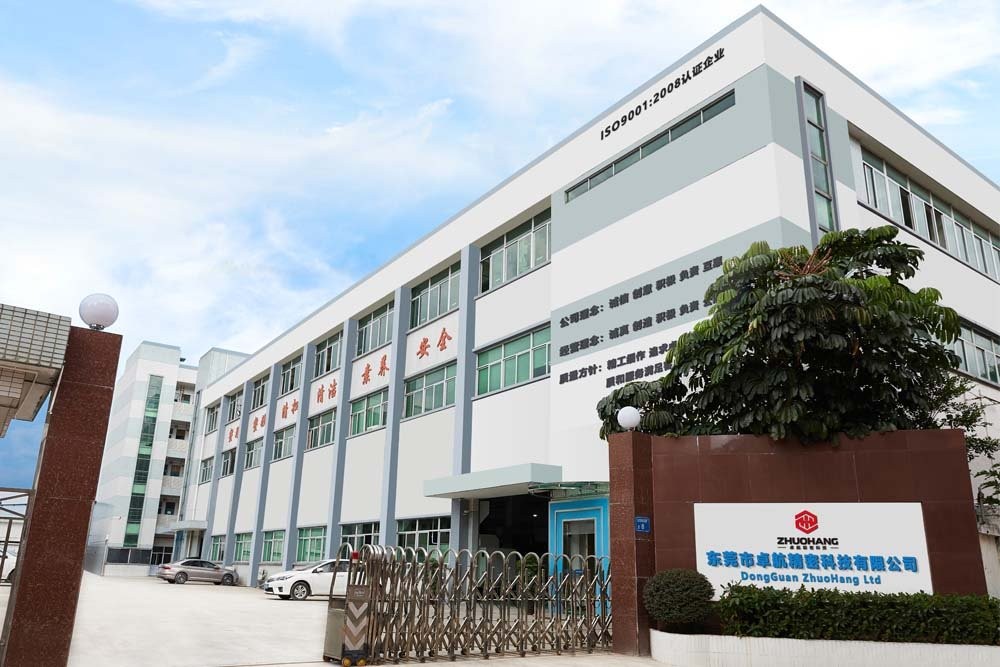
Facility size matters for one reason you should care about: it determines whether a production ramp can be absorbed without displacing other work. The plant covers 6,800 m² and employs 100+ people, with the majority holding technical roles. That is capacity to take a part from a single prototype to a production run without a hand-off to a subcontractor or a queue that blows the schedule.
The facility layout keeps production, inspection, and office functions in one building, with staff accommodation and dining in a second. For you, the practical meaning is simple: the machines that cut your part and the CMM that measures it are in the same building, under the same quality system, answering to the same schedule.
How Does In-House Inspection Verify the Tolerance Promise?
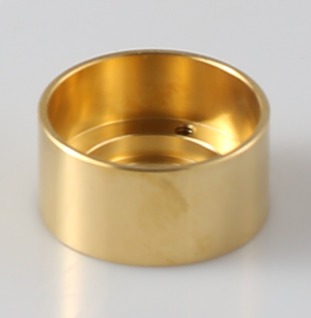
The DFM review quotes a tolerance; the factory's inspection bench proves it. In the same building as the machines sit Hexagon GLOBAL S CMMs, an XRF spectrometer for material composition, a KEYENCE laser microscope, and a SURFCOM profiler for surface finish, alongside hardness, coating-thickness, salt-spray, and tensile testers.
This is the equipment a buyer would bring to an audit, and it is already here. When the review says a dimension is ±0.002 mm (turning) / ±0.003 mm (milling), the CMM confirms it; when it says the alloy is 6061 aluminum, the XRF confirms it against the mill certificate. In-house inspection is the difference between a tolerance that is stated and a tolerance that is demonstrated.
How Is Material Verified Before It Reaches a Machine?
Material is where a machining process can fail without anyone noticing until it is too late, because a mixed or mislabeled alloy looks identical to the eye and only fails later, in service. The factory's answer is to verify every incoming lot at the door, before cutting, against its mill certificate.
The check runs on an XRF spectrometer, which reads the elemental composition of the metal and confirms it matches the alloy specified on the drawing. A batch of 6061 aluminum must read as 6061, not as a look-alike; a 316 stainless lot must read as 316, not as 304. The XRF result, paired with the supplier's mill certificate, is the chain of evidence that the material requirement was actually met.
This is the same discipline an IATF 16949 audit looks for, applied to every job rather than only to automotive ones. For you, the practical meaning is simple: when a part must meet a strength, corrosion, or thermal requirement, the material was verified at intake, not assumed from a label.
Which Certificates Bind the Factory's Quality System?
Certificates are the third-party confirmation that the factory's systems — not just its machines — are real. The plant holds three, with certificate numbers you can verify with the registrar.
| Standard | Certificate number | Scope |
|---|---|---|
| ISO 9001:2015 | 116024/A/0001/UK/En | Machining of metal parts |
| IATF 16949:2016 | 131941/A/0001/SM/En | Manufacture of CNC metal machining parts (excludes product design, Clause 8.3) |
| ISO 14001:2015 | 116024/B/0001/UK/En | Environmental management related to machining of metal parts |
Honest scope note: the IATF 16949 scope excludes product design under Clause 8.3 — the factory is build-to-print. A program that needs the supplier to own design responsibility is scoped separately, not assumed.
Where Is the Factory, and Who Is Behind It?
The factory operates under the legal name Dongguan Zhuohang Ltd, also known as Zhuohang Precision Machining Factory, with registration number 91441900MA4UWT6X39. It was founded in 2005 and is located at:
No. 8, Shuibian Songyuan Road, Hengli Town, Dongguan City, Guangdong Province, China 523470.
Visits and audits are welcome — the address, machine list, and certificate numbers can all be confirmed before you travel, so the trip is a verification rather than a tour.
What Should a Buyer Look For on a Factory Visit?
A factory visit is a verification, not a tour, and the things worth checking are the same ones a DFM review depends on. The checklist below is what separates a shop that can back its review from one that can only describe it.
- Named machines, present and running. If the review assigns a part to a Swiss machine or a mill-turn center, that class of machine should be on the floor, not on a subcontractor's invoice.
- Inspection next to production. The CMM and XRF should sit in the same building as the machines, because a tolerance verified in-house is a tolerance the shop actually controls.
- Material handling and identification. Raw stock should be marked and segregated by alloy, so a 316 lot cannot quietly become a 304 part.
- Certificate numbers you can check. ISO 9001, IATF 16949, and ISO 14001 numbers should be verifiable with the registrar, not just printed on a wall.
- Traceability on the floor. Ask how a given lot is tracked from raw material to inspection. A shop that can show the record is a shop that can contain a problem instead of a whole run.
None of this requires deep manufacturing knowledge — it requires asking, and watching whether the answer is a name and a number or a gesture. A DFM-first factory wants the audit, because the audit is where its claims turn into evidence.
What this shop actually runs
Ask for capability evidence and the answer should be specific. The facility behind this guide runs 100+ CNC machines on a 6,800 m2 floor in Dongguan, China, with 100+ staff. The machine list, by category:
- 5-axis machining centres (10+) - Mazak VARIAXIS I-600 (510/910/510 mm travel, 12,000 rpm, 22 kW, 71.6 N·m, 30-tool BT40) and Mazak INTEGREX I-250H S (B-axis 0.0001°, 24 kW, 124 N·m, 38-tool HSK-A63). Practical for compound-angle parts, single-setup multi-face prismatic work, and aerospace fittings where datum transfer loss is unacceptable.
- 3-axis / 4-axis machining centres (50+) - Brother SPEEDIO S500Z2N / S700Z2N (10,000 rpm, 14/21-tool ATC, 0.7 s tool-to-tool, Z-axis 2.2 G) and Mazak VCE-430A L / VCE-570C L (10,000 rpm, 118 N·m, 24-tool ATC). Practical for prismatic parts, plates, brackets, housings.
- Swiss-type turning centres (10+) - Citizen Cincom A20-3F7 (Φ20 mm, 10,000 rpm), TSUGAMI B0206-III / B0205-III (Φ20 mm, 0.1 µm), STAR SR-32JII / SR-32J Type N (Φ32 mm, 8,000 rpm). Practical for long, slender rotational parts at ±0.002 mm.
- CNC turning centres (20+) - HEADMAN T70M/1250 (720 mm swing, 117 mm bore, 3,000 rpm, BMT75 12-station turret). Practical for shafts, bushings, flanges up to ±0.002 mm.
- Wire EDM (5+) - Sodick AQ535L (550/350/300 mm travel, ±20° taper, 800 kg workpiece). Practical for hardened tool steel, internal splines, sharp internal corners that milling cannot reach.
- Inspection: Hexagon CMM + 20+ gauges - Hexagon CMM for coordinate measurement, plus vision system, profilometer, hardness tester, coating thickness gauge, XRF for material verification. The 10:1 rule (gauge 10x more accurate than the band) is applied to every feature.
- Machine highlights - VARIAXIS I-600: one-setup multi-face 5-axis + MAZA-CHECK auto-calibration; INTEGREX I-250H S: DONE-IN-ONE mill-turn, B-axis 0.0001° + Ai thermal shield; SPEEDIO S500Z2N / S700Z2N: Z-axis 2.2 G + 0.7 s ATC; Swiss-type: guide-bush switchable + 0.1 µm resolution.
Tolerances held: milling ±0.003 mm, turning ±0.002 mm, grinding and wire EDM ±0.002 mm. Capability: Ppk >= 1.67 initial and Cpk >= 1.33 in production on key characteristics.
Certifications: ISO 9001:2015 (116024/A/0001/UK/En), IATF 16949:2016 (131941/A/0001/SM/En, clause 8.3 design excluded, disclosed openly) and ISO 14001:2015 (116024/B/0001/UK/En), issued to Dongguan Zhuohang Ltd, USCC 91441900MA4UWT6X39, established 2005.
Service area: Austria, Belgium, the Czech Republic, Denmark, France, Germany, Greece, Hungary, Ireland, Italy, the Netherlands, Spain, Sweden and the United Kingdom in Europe; Brazil, Canada, Mexico and the United States in the Americas; China, Israel, Japan, Singapore and Sri Lanka in Asia; Australia and New Zealand in Oceania; and South Africa in Africa — built in China, shipped worldwide.
Contact: Felipe Iglesias, [email protected], +86 13126536955.
Visit the factory behind the DFM review
Arrange an audit or send a drawing to [email protected] or call +86 13126536955.
Frequently Asked Questions
Where is the factory located?
In short, At No. 8, Shuibian Songyuan Road, Hengli Town, Dongguan City, Guangdong Province, China 523470.
How large is the factory and how many machines does it run?
The facility covers 6,800 m² and runs 100+ production machines, with more than 100 employees. The machine mix spans turning, milling, mill-turn, and grinding, so most metal-cutting operations stay in-house rather than being subcontracted.
Which machine brands are on the floor?
Mazak, Brother, Citizen, Star, and Tsugami. The mix covers high-speed machining centers, mill-turn and multi-tasking centers, and Swiss-type lathes, matched to the geometry of the part rather than to a single brand preference.
Does the factory inspect parts in-house?
Yes. Hexagon GLOBAL S CMMs, an XRF spectrometer, a KEYENCE laser microscope, and a SURFCOM profiler sit in the same building as the machines, so dimensions and material composition are verified on site rather than sent out.
Is the factory certified?
It holds ISO 9001:2015, IATF 16949:2016, and ISO 14001:2015. The IATF 16949 scope covers the manufacture of CNC metal machining parts and excludes product design under Clause 8.3.
Can I visit the factory?
Yes, factory visits and audits are welcome. Contact [email protected] to arrange a time, and the address and machine list can be confirmed before you travel, so the visit is productive rather than a sales tour.
What does the XRF check verify?
In short, It reads the elemental composition of an incoming metal lot and confirms it matches the alloy on the drawing and the mill certificate. This catches a mixed or mislabeled alloy at the door, before it reaches a machine, so the material cut is the material specified.
What is the largest part the factory can machine?
The largest milling envelope is 1300 × 700 × 600 mm, and the largest turning envelope is Ø720 × 1280 mm. Within those limits, the part is matched to a machine class sized for it, which keeps cycle time and cost where the review estimated them.
How does the factory track a lot from raw material to shipment?
In short, The MES/ERP system records raw material source and usage, process parameters, machine data, batch, machining time, operator, and inspection results on every lot. That record lets the factory isolate a single lot and find root cause instead of holding a whole run suspect.
Standards referenced on this page
- ASTM A276/A276M-17 — Standard Specification for Stainless Steel Bars and Shapes
- ASTM B211/B211M-19 — Standard Specification for Aluminum-Alloy Rolled or Cold Finished Bar, Rod, and Wire
- ISO 9001 — Quality management systems — Requirements
Business conduct and due diligence
We operate in full compliance with all applicable laws and regulations. Suppliers are paid on agreed terms and wages are paid in full and on time. Every full-time employee receives the statutory benefits required by law. We support local community development through charitable donations.
Our legal and regulatory record is publicly verifiable in China, with no material litigation or enforcement action involving customers, suppliers, employees, authorities, or other third parties. Buyer-side due diligence is welcome.